Posts

Showing posts with the label 2004

Britten – A Midsummer Night’s Dream

Image
La Monnaie, Brussels – December 26 2004 Conductor: Ivor Bolton. Production: David McVicar. Sets & costumes: Rae Smith. Oberon: Michael Chance. Tytania: Laura Claycomb. Puck: David Greeves. Theseus: Brindley Sherratt. Hippolyta: Ruby Philogene. Lysander: Alfred Boe. Demetrius: Leigh Melrose. Hermia: Deanne Meek. Helena: Madeline Bender. Bottom: Laurent Naouri. Quince: Henry Waddington. Flute: Richard Coxon. Snug: Gwynne Howell. Snout: Kim Schrader. Starveling: Lionel Lhote. I had joked, before going, about the timeliness of programming A Midsummer Night’s Dream over the Christmas period. But as the emphasis in this production is definitely on the magical, to magical effect, it turned out to be a good Christmas show after all. I had other reasons to worry, too: my mother was joining us for this one and she likes her opera to be escapist, which to her means, among other things, in period gear. I thought McVicar might let her down. Remember his Agrippina ? Of that, I wrote, for exampl...

Offenbach – La Grande Duchesse de Gérolstein

Image
Théâtre du Châtelet, Paris – December 16 2004 Conductor: Marc Minkowski. Production: Laurent Pelly. La Grande Duchesse: Felicity Lott. Wanda: Sandrine Piau. Fritz: Bernard Richter. Baron Puck: Franck Leguérinel. Prince Paul: Eric Huchet. General Boum: François Le Roux. Baron Grog: Boris Grappe. Népomuc: Alain Gabriel. Iza: Maryline Fallot. Olga: Blandine Staskiewiecz. Amélie: Aurelia Legay. Charlotte: Jennifer Tanni. The Notary: Christophe Grapperon. I can see I’ll never make it as a professional critic. When a performance is exceptionally bad, reviewing it is relatively easy. But when it’s exceptionally good, I can’t find the words. After a great deal of head-scratching, I decided that “mesmerised” would do to describe me during the final act of La Grande Duchesse de Gérolstein . I was mesmerised by Felicity Lott. In all my years of opera-going, I don’t think I’ve ever seen the expression “comic genius” so vividly made flesh. I wondered, as I sat there and watched her in her jauntily ...

Händel – Hercules

Image
Opéra National de Paris – Garnier, December 6 2004 Conductor: William Christie. Production: Luc Bondy. Hercules: William Shimell. Dejanira: Joyce DiDonato. Hyllus: Toby Spence. Iole: Ingela Bohlin. Lichas: Malena Ernman. Priest of Jupiter: Simon Kirkbride. Orchestra and Chorus of Les Arts Florissants. Händel Having heard that the first part (acts 1 and 2) of this production lasted 2 hours 15 minutes, I had asked, on the web, if it was fair on the audience. As it turned out, my fears for my bottom were unfounded. It’s a credit to both Händel and William Christie that an almost 4-hour evening of da capo arias should have sped by without a moment’s boredom. I’ve sometimes complained that Christie’s performances of Rameau were, to me, too “feathery” or “fluffy.” There was little of that here. Apart from occasional prolonged passages of virtuoso piano or pianissimo playing, in a sense a mannerism, this was Händel at his best, full of nuance, invention and – as Christie pointed o...

Le concert d’Astréé in Bach and Händel

Théâtre des Champs Elysés - December 3 2004 Conductor: Emmanuelle Haïm. Veronica Cangemi, soprano. Le Concert d'Astrée. Bach: Suite n° 3 en ré mineur BWV 1068; Cantata Jauchzet Gott in allen Landen BWV 51. Händel: Concerto grosso op. 6 n° 1; Il Delirio Amoroso . Grazie, obbligato. If I begin another review with the words “comparisons are odious” I no doubt run the risk of being chased off this blog forever. But at last night’s Bach and Händel concert at the Théâtre des Champs Elysées, both the programme and the circumstances invited comparison. The former, by placing Emmannuelle Haïm and her young orchestra squarely in the lineage of Les Arts Florissants and Les Musiciens du Louvre. The latter, because Veronica Cangemi was replacing Natalie Dessay, who has cancelled her engagements for a second operation to her vocal chords. Well, Le Concert d’Astrée is not Les Arts Florissants. Händel at his most taxingly virtuoso, live, is not Monteverdi in the studio. And Veronica Cangemi is no...

Francis Poulenc – Dialogues des Carmélites

Image
Opéra National de Paris – Bastille, November 13, 2004 Conductor: Kent Nagano. Production: Francesca Zambello. Le Marquis de la Force: Alain Vernhes. Blanche: Dawn Upshaw. Le Chevalier: Yann Beuron. L'Aumonier du Carmel: Michel Sénéchal. Madame de Croissy: Felicity Palmer. Madame Lidoine: Eva Maria Westbroek. Mère Marie: Anja Silja. Soeur Constance: Patricia Petibon. Orchestre and Chorus of the Opéra National de Paris. If this were Japan, the tenor Michel Sénéchal (Aumonier), now over 75, would long ago have been declared a living national treasure. It’s the custom, when he takes a bow, to give him an ovation for the mere fact that he’s still treading the boards and singing a few notes. So it’s a measure of the overall ill-humour of the Paris public at present (mentioned in my recent review of St François d’Assise ) that his showing in Poulenc’s Dialogues has been severely criticised and people have said it’s time for him to stop (I noted, yesterday evening, that he didn’t...

Cincinnati SO in Beethoven and Mahler

Image
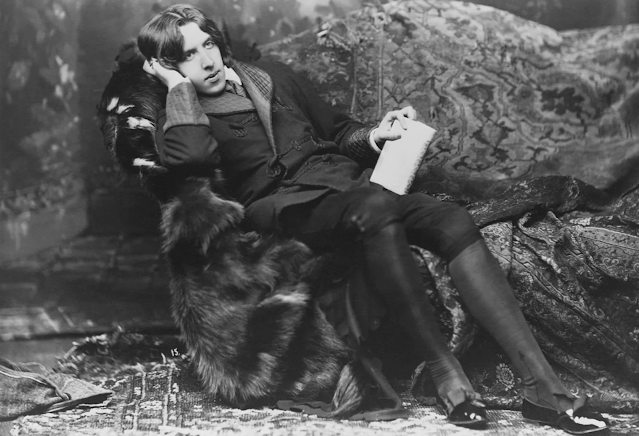
Théâtre du Châtelet, Paris: November 5 2004 Beethoven: piano concerto n°4 with Hélène Grimaud. Mahler: symphony n°5. Paavo Järvi, conductor. Algernon . Did you hear what I was playing, Lane? Lane . I didn’t think it polite to listen, sir. Algernon . I’m sorry for that, for your sake. I don’t play accurately - any one can play accurately - but I play with wonderful expression. As far as the piano is concerned, sentiment is my forte. The French musical world has a tendency to agree with Oscar Wilde’s Algernon. Actually playing all the notes right is seen as somehow cold, calculating, hard-hearted. This is something I’ve never become reconciled to in France, and explains why I usually only buy tickets for concerts with visiting orchestras. The Cincinnati SO might be described as an antidote to the French emphasis on “wonderful expression” at the expense of accuracy. Indeed, their playing on Friday evening was so forthright and “in your face” it was tempting to imagine that, just three day...

Verdi – Aida

Image
Théâtre Royal de la Monnaie, October 24 2004 Conductor: Kazushi Ono. Production: Robert Wilson. Aida: Michèle Crider. Radamès: Badri Maisuradze. Amneris: Marianne Cornetti. Amonasro: Andrzej Dobber. Ramfis: Orlin Anastassov. Il Re: Guido Jentjens. Should it have been called “Amneris”? How often, I wonder, in Verdi operas, does it happen that the mezzo, realising her fellow leads aren’t up to scratch, decides to take over the whole show? That’s what happened with the cast of Sunday’s Aida at La Monnaie in Brussels. Marianne Cornetti’s round, powerful mezzo stood head and shoulders above her principal colleagues, while the latter demonstrated just how hard Verdi really is and how outstanding are those singers, sopranos especially where Aida is concerned, who magically allow us to forget the fact. I had not heard Michèle Crider before, but often read her name: she’s forging a career in major European houses. Did she, perhaps, have the cold that half of the continent seems to be sufferin...

LSO and Boulez

Image
Théâtre du Châtelet, Paris: October 21 and 22 2004 October 21: Pierre Boulez, Livre pour cordes ; Gustav Mahler, Symphony N°7 October 22: Pierre Boulez, Dérive 2 ; Igor Stravinsky, Symphonies d’instruments à vent, Le Sacre du printemps . What can I say ? Boulez isn’t a composer I listen to at home, and though I don’t find half an hour of his music “difficult,” the rhythmic complexity and rapid pace make it hard for me to decipher and therefore hard to criticise. The Livre pour cordes left no impression on me; Dérive 2 had more impact and certainly the eleven LSO players involved put a great deal of skill and effort into making a success of its waves of sound and driving energy. Boulez Why is it sometimes suggested the LSO is now below world-class? Maybe my judgment has been clouded by long years in France, where orchestras sound as ad hoc as their members’ tenure is guaranteed, whether they play well or badly. The LSO played like a well-oiled English machine from the days when Bri...

Messiaen – St François d’Assise

Image
Opéra National de Paris – Bastille: October 20 2004 Conductor: Sylvain Cambreling. Production: Stanislas Nordey. L'Ange: Christine Schäfer. Saint François: José Van Dam. Le Lépreux: Chris Merritt. Frère Léon: Brett Polegato. Frère Massée: Charles Workman. Frère Elie: Christoph Homberger. Frère Bernard: Roland Bracht. Frère Sylvestre: Guillaume Antoine. Frère Ruffin: David Bizic. Orchestra and Chorus of the Opéra National de Paris. To some extent, Paris was lying in wait for this new production of St François , the third since 1983. It raised questions that added fuel to simmering disgruntlement with the new management. Did we really need a new production, not actually having had the opportunity to tire of Peter Sellar’s very good (and no doubt expensive) 1992 one? Was it wise to programme so many performances? Why two 40-minute intermissions, leading to a six-hour evening starting at 5.30 p.m. even on weekdays – and to about one third of empty seats? Even the first night was more s...

Debussy – Pelléas et Mélisande

Image
Opéra National de Paris – Bastille, September 29 2004 Conductor: Sylvain Cambreling. Production: Robert Wilson. Pelléas: Simon Keenlyside. Golaud: Franck Ferrari. Arkel: Ferruccio Furlanetto. Le petit Yniold: Sébastien Ponsford. Un médecin: Frédéric Caton. Mélisande: Mireille Delunsch. Geneviève: Dagmar Pecková. Un berger: David Bizic. Orchestra and Chorus of the Opéra National de Paris. Disappointing Pelléas despite potentially strong cast Pelléas et Mélisande is sometimes said to have been ahead of its time. I hadn’t realised, before Wednesday night, quite how far. Golaud’s first words to Mélisande were “Please switch off your mobile phone.” The rest of the audience seemed pleasantly surprised, too. At any rate, the line raised a laugh – the only one of the evening, no doubt. But was Maeterlinck really so prescient; or could there have been a problem with the supertitling sytem, I wonder? I'm not a great fan of Pelléas . I don’t listen to it at home, but it works for me...

Richard Strauss - Capriccio

Image
Opéra National de Paris - Garnier, July 2 2004 Conductor: Ulf Schirmer. Production: Robert Carsen. Die Gräfin: Renée Fleming. Der Graf: Rainer Trost. Olivier: Gerald Finley. La Roche: Franz Hawlata. Clairon: Anne-Sofie Von Otter. Monsieur Taupe: Robert Tear. Italian singers: Annamaria dell'Oste, Barry Banks. Der Haushofmeister: Petri Lindroos. Thousands couldn’t be wrong I admit I’ve had a “problem” with Renée Fleming. While friends gushed and flocked to hear her live and buy her CDs, I remained sceptical, not to say unmoved. On the first two occasions I saw her, I left at the intermission. Not in a huff but unimpressed, and when you’re bored at the opera house and haven’t had dinner yet, the vision of a tripe sausage with mustard and thick-cut fries starts to hover where the supertitles should be... It’s true that Paris’s awful production of Manon didn’t help, and the staging of Rosenkavalier , imported from Austria, is even worse. And while Fleming’s voice is medium-sized...

Wagner - Tannhäuser

Image
La Monnaie, Brussels, Sunday June 27 2004 Conductor: Kazushi Ono. Production and choreography: Jan Fabre. Hermann: Stephen Milling. Tannhäuser: Louis Gentile. Wolfram von Eschenbach: Stephan Loges. Walther von der Vogelweide: Daniel Kirch. Biterolf: Andrew Greenan. Heinrich der Schreiber: Donal Byrne. Reinmar von Zweter: Jacques Does. Elisabeth: Adrienne Dugger. Venus: Natascha Petrinsky. Ein junger Hirt: Anne-Catherine Gillet. Don’t you often wonder why you keep going back to the opera? Second-rate music, dodgily performed by a second-rate orchestra and singers with not a clue about acting, fights for attention with latecomers, coughing, mobile phones, the clatter of programmes falling from knees, hunger, heat and a sore bum. But occasionally the magic happens: something gels, it all comes together and we are raised to a different plane; time stands still, your neighbours stop fidgeting (brutes though they are, even they sense something is happening), your bottom goes perfectly numb, ...

Rameau - Les Paladins

Image
Théâtre du Châtelet, Paris - Saturday May 22 2004 Les Paladins puts the fun back in "divertissement" "Jamais deux sans trois," the French say: bad things come in threes. After a poor Eliogabalo in Brussels and a boring Les Boréades in Lyons I expected the worst of the comédie-ballet Les Paladins . But, as I think I've said before, expecting the worst can be good policy: my luck turned, and how. This production is young, joyful, bright as a button; it puts the fun back in divertissement. It's the best thing in Baroque since - you guessed it! - Platée . However, in less than an hour I have a cab to the airport. I'll tell you more about Les Paladins when I get back from Rajastan... Edited one week later: I come back from Rajasthan - having learnt to spell it better - to find that there's a perfectly representative review in UK daily The Independent . What it doesn't say is how much better than usual - i.e. than the voiceless wonders baroque opera...

Rameau - Les Boréades

Image
Opéra de Lyon - Saturday May 15 2004 Conductor: Marc Minkowski. Production: Laurent Pelly. Alphise: Mireille Delunsch. Abaris: Paul Agnew. Borée: François Lis. Sémire/Nymphe: Magali Léger. Borilée: Marcel Boone. Polymnie/Amour: Malia Bendi Merad. Apollon: Thomas Dolié. Calisis:Tom Allen. Adamas: Stéphane Degout. Les Musiciens du Louvre-Grenoble, Orchestra and Chorus of the Opéra de Lyon. We don't seem to be having much luck with pre-Mozartian opera* at the moment. We spent last Sunday afternoon on an unplanned walking tour around Brussels, having quit Cavalli's Eliogabalo at the first intermission. (The press kindly informed us, later, that things had got much better in part two. Oh, well...) Yesterday morning (Saturday), I flew in to Charles de Gaulle from Atlanta, waited an hour for bags, tooled into Paris to miss the 12 o'clock train to Lyon by minutes and finally took the 1 p.m., arriving at 3... Why bother? Well, on paper it looked like Lyon had assembled a dream team...

Mahler - Symphony N°2, "Resurrection"

Image
Paris, Théâtre du Châtelet - April 26 2004 Conductor: Esa-Pekke Salonen. Philharmonia Orchestra. London Philharmonic Choir. Ruth Ziesak, soprano. Charlotte Hellekant, alto. Should I be writing about this concert? Probably not, but one or two people asked me to. I am not, as some of you may have noticed, a Mahler fan. But I booked this concert thinking that, perhaps, the Philharmonia under a famous conductor might work some kind of epiphany on me and that finally I'd understand. It didn't happen. I won't say exactly what went through my mind at various stages during this long piece, as I don't want to offend the many Mahler lovers around; let's just say it didn't include the word "profound" and that I have a Mahler problem. Before writing, I tried to find reviews of Salonen in the same work, to check if my opinion found echos in LA or London. I found only one, which, while highly positive overall, did hint at a similar impression to mine. I'll give ...

Massenet - Werther

Image
"Baritone version," concert performance Théâtre du Châtelet, Paris, April 29 2004 Conductor: Michel Plasson. Werther: Thomas Hampson. Charlotte: Susan Graham. Albert: Stéphane Degout. Sophie: Sandrine Piau. Le Bailli: René Schirrer. Schmidt: François Piolino. Johann: Laurent Alvaro. Orchestre National du Capitole de Toulouse. Excellent Werther. More Massenet, please If there's anything wrong with Massenet, it isn't his music. Is it the words, then? Are his texts too soppy for modern tastes? Personally, I see no reason why, if people flock to something as soppy as La Bohème , they shouldn't flock to Massenet. His exoticism and overall "sexiness" ought these days to have broad appeal. There's a whole repertoire of French opera waiting for a revival, works that can be made to work provided houses find the right conductor and singers, willing to take them seriously and perform them with conviction. Those old Decca recordings taught us that. Wednesday...

Wagner - Tannhäuser

Image
Paris Version (1861) Théâtre du Châtelet, Paris, April 13 2004 Conductor: Myung-Whun Chung. Production: Andreas Homoki . Tannhäuser: Peter Seiffert. Elisabeth: Petra-Maria Schnitzer. Venus: Ildiko Komlosi. Wolfram: Ludovic Tézier. Hermann: Franz-Josej Selig. Young shepherd: Katija Dragojevic. Walther: Finnur Bjarnason. Biterof: Robert Bork. Heinrich: Nikolai Schukoff. Reinmar: Nicolas Courjal. Radio France Chorus, Orchestre Philharmonique de Radio France. Simple production, strong cast Director Andreas Homoki was responsible for an excellent Die Frau ohne Schatten at the Châtelet 10 years ago and, more recently, an equally excellent Zemlinsky double-bill in Brussels. His approach to Tannhäuser in Paris didn't please everyone. Perhaps Wagner fans are fed up with Konzept productions and would like, for once, a more literal approach to their hero's (or god's) works. Homoki was booed on the first night. But as he didn't appear at the second, the loud applause went on uni...

Verdi – Otello

Image
Opéra National de Paris-Bastille - March 23 2004 Conductor: James Conlon. Production: Andrei Serban. Otello: Vladimir Galouzine. Iago: Jean-Philippe Lafont. Desdemona: Barbara Frittoli. Cassio: Jonas Kaufmann. Roderigo: Sergio Bertocchi. Emilia: Elena Cassian. Lodovico: Giovanni Battista Parodi. Montano: Christophe Fel. Herald: Rodrigo Garcia. Orchestra and Chorus of the Opéra National de Paris. Andrei Serban’s new production of Otello at the Bastille got off to a rousing start, with storm scenes projected on gauzes and sets, and the chorus massed on the dark stage in black oilskins. (We could have done without the canned thunder, however.) It carried on successfully with some very impressive “fire” during the scenes of rejoicing and drink. From the moment Otello and Desdemona were left alone, it went rapidly downhill. Just what it was that made it so irritating is hard to pin down. It degenerated into scrappiness, disjointedness, inconsistencies that reviews in the press have ...